
Resource hub
Honest answers to the questions homeowners actually ask.
Calm, plain-English guides on solar, battery backup, your SDG&E bill, and wildfire readiness — written for humans, not engineers.
Choosing an Installer
How to choose a solar provider — and why Sean partners with Aloha.
Solar is a construction project. The contractor you hire matters more than the panels on the roof — and the right installer can save you years of headaches.
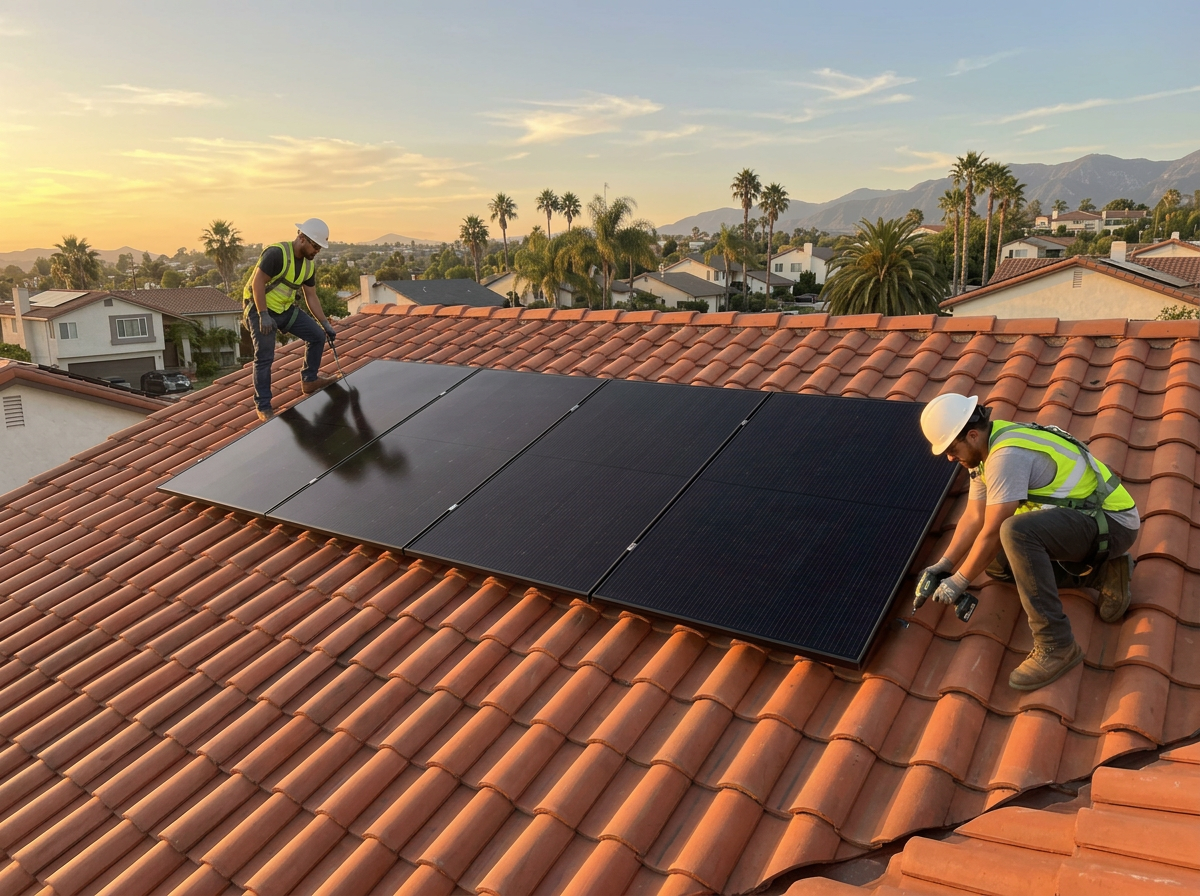
What should you look for in a solar provider?
Finding a solar provider you can trust is the most important decision in the process. Verify their track record, real reviews across multiple platforms, and local reputation before you sign anything.
- Years in business and a strong, verifiable track record.
- Real Google, Yelp, and BBB reviews — not just curated testimonials.
- A local reputation you can pressure-test by asking neighbors.
You can always find a cheaper quote, but cheap installs often lead to poor workmanship, lackluster service, and continual headaches across 25 years of ownership.

My installation partner
Why Aloha Solar Power & Electrical Services?
Local
Based out of Encinitas and operated by Gabe Wellsheim, a hands-on master electrician who cares deeply about customer service.
In-house
A true in-house installer with no third-party subcontractors, so you know who is working on your home and servicing your system.
Professional
Unique to the solar industry, Aloha is the only true union contractor where every member of the install crew is a certified electrician — not one foreman supervising entry-level workers.
Quality control
Aloha intentionally serves greater San Diego County only, keeping response times fast and workmanship tightly controlled.
Competitive pricing
Aloha keeps overhead extremely low — no offices, online training, a small sales team, and no flashy merchandise or sales incentives. That means superior craftsmanship at very competitive pricing.
We're the champs!
Aloha won back-to-back 1st Place finishes at the Solar Games National Competition in 2023 and 2024. Every company installs on the same roof, then systems are judged on craftsmanship quality, efficiency, and aesthetics.

Aloha holds 5-star ratings on Yelp, Google, and the Better Business Bureau — plus back-to-back first-place finishes at the Solar Games National Competition.
Education · Purchase Options
Four ways to pay for solar & battery in 2026
There's no single "right" way to go solar — just the one that fits your goals, your cash flow, and how long you plan to stay in the home. Here's a plain-English look at the four most common paths.
A · Prepaid PPA
Capture the 30% tax credit
Structured under the "Big Beautiful Bill" to capture the 30% federal tax credit. Pre-pay 70% of cost upfront or finance 70% via a $0-down loan. On paper the PPA company holds ownership for a minimum of 5 years, then transfers it to you on request.
- Greatest savings, fastest payback, highest ROI
- Same long-term benefits and warranties as ownership
- Can be bundled with add-ons and SDCP battery rebate
B · POWER PURCHASE AGREEMENT (PPA)
Pay only for what it produces
$0 down. You pay a set rate per kWh produced — typically 30–50% below SDG&E from day one. A third party owns and covers maintaining the system. Comes with an additional 25-year solar + battery Production Guarantee. Available with SDCP battery rebate. 650 credit score required.
- Lowest instant monthly savings
- No loan, no credit hit or debt-to-income impact
- Easier to transfer vs solar loan
C · Solar Loan ($0 Down)
Own it — spread the cost
Finance 100% of system cost plus any add-ons for $0 down and receive a fixed monthly payment, often well below your current SDG&E bill. You still own the system. Available with SDCP battery rebate. 650 credit score required.
- Every payment builds equity
- Pre-pay or pay off any time
- Greater long term savings vs $0 Down PPA
D · Cash Purchase
Own your system outright
Pay 100% of system cost plus any add-ons after installation is complete, own the system from day one. Great long-term savings and fast payback. Available with SDCP battery rebate.
- Strong savings, fast payback, high ROI
- Adds value to your home
- No hassle when selling
*All options include our 10-Year Workmanship Warranty, 25-Year Performance Warranty, and 25-Year Manufacturer Warranty.
Not sure which path fits your home? Sean walks you through the math — side by side, no pressure.
The Federal Solar Tax Credit, Explained (30% ITC)
EnergySage's plain-English breakdown of the 30% Residential Clean Energy Credit — what qualifies, how to claim it, and how it stacks with battery storage.
California NEM 3.0: What Homeowners Need to Know
How California's net billing tariff changed export credits, why battery storage now drives the payback math, and what to expect from a new system.
Home Battery Backup Power vs. Generators
A side-by-side comparison of upfront cost, runtime, fuel, noise, and maintenance — useful when deciding how to keep the lights on during a blackout.
Ready for Wildfire: Prepare Your Home & Property
CAL FIRE's official homeowner guide to preparing your property — defensible space zones, hardening materials, and what to do during a red-flag warning.
SDG&E Residential Pricing Plans
SDG&E's pricing-plan chooser walks through residential rate options (TOU-DR1, TOU-DR2, EV-TOU-5) so you can see which plan fits your usage before adding solar or battery.
What's the Average Solar Savings for a U.S. Home?
SolarReviews breaks down real-world savings from residential solar — payback periods, lifetime savings, and the variables that move the numbers most.
Have a question we haven't answered?
Sean reads every message personally. Ask anything — no obligation.